
Finding Fabric for Anywhere in Your Home
Fabric is part of a room that you feel before you ever see it. And it's doing more work than most people give it credit for.
I am thinking about fabric and how it affects a space all of the time. The weight of a pleated drape, the way a velvet chair reads differently in morning light than it does in the evening. The texture of a handmade throw that makes a sofa feel more intentional. These things are not decorative afterthoughts, they are integral to the room.
And yet fabric is where I see people hold back the most. Too many choices, too much uncertainty about what works where, too much fear of getting it wrong. So let's talk through it, room by room, because once you understand what fabric is actually doing in a space, the choices start to make a lot more sense.
The Principles First
Before we get into specifics, there are two things worth understanding.
Soft versus statement is not about loud versus quiet. A statement fabric can be a deeply textured natural linen in a room full of smooth surfaces. Soft doesn't mean boring. It means the fabric is working in the background, adding warmth and depth without asking to be noticed. Both have a role in every room, and the best spaces usually have both.
Scale and proportion matter here too. A small pattern on a large sofa disappears. A large, bold print on a single accent chair can anchor an entire room. Before you fall in love with a fabric, think about where it's actually going to live and how much of it you'll be seeing at once.
Living Rooms
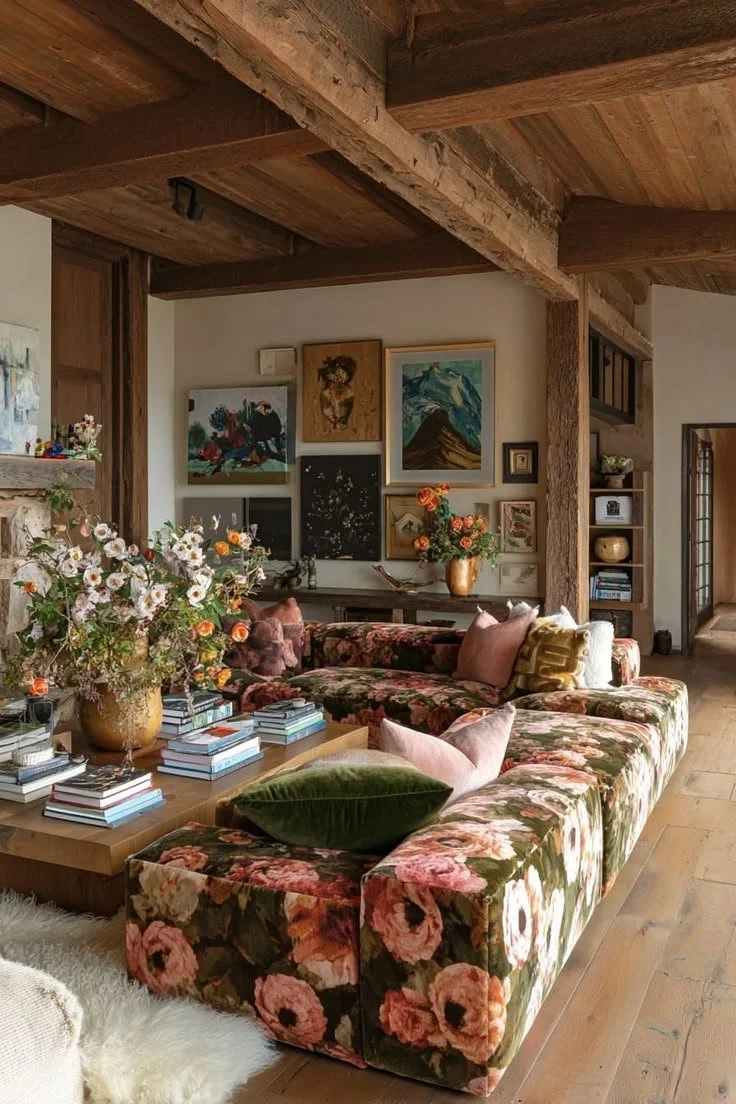
The living room is where I most often see people play it safe when they really don't have to. The sofa is usually the anchor, and my general advice is to choose something durable and relatively neutral there. A textured neutral, a woven performance fabric in a grounding tone. A choice like this gives you space to play through accent chairs, window coverings, and rugs in the room.
When you save the statement for somewhere less expected, like a single chair in a bold print or a rich velvet, an invitation for a moment of joy or curiosity is immediately created. If everything in a living room is smooth, it will always feel slightly cold, no matter how carefully chosen. Texture is what makes a room feel inhabited.
Bedrooms
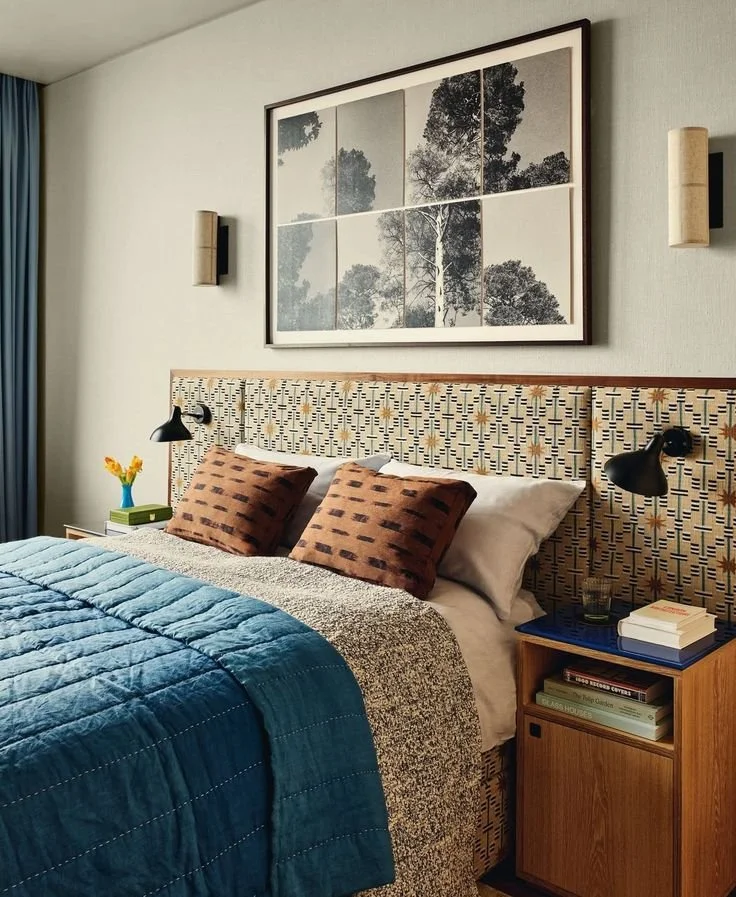
The bedroom is where fabric can be its most personal. This is the one room where I encourage people to go softer, more layered, more generous than they might anywhere else in the house, because the room exists specifically for rest and it should feel like it.
Linen bedding that gathers naturally. A velvet or bouclé headboard that makes the whole room feel like a place to exhale. Curtains heavy enough to actually block the light rather than just suggesting privacy. These are functional choices as much as aesthetic ones.
Floor length drapery in a bedroom, even a modest one, add something that shorter panels simply cannot. Don't underestimate what that does to the whole room.
Dining Rooms
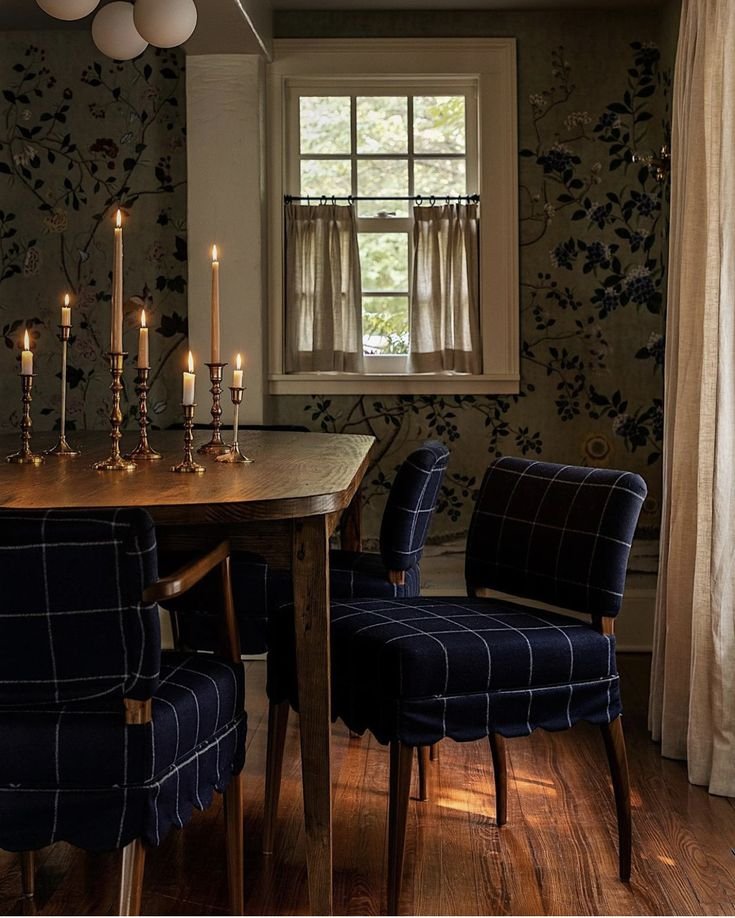
Fabric in dining rooms tends to get overlooked because people are so focused on the table and chairs. But an upholstered dining chair, done right, changes the entire experience of sitting down to a meal. It says: stay a while.
For dining chairs, durability matters and performance fabrics have come a long way. There are beautiful options that handle real life without looking like they're trying to. Velvets also tend to hold up better than people expect in dining settings, which surprises almost everyone.
If your chairs are wood or cane, a textile moment somewhere nearby does similar work. A small scale pattern on a roman shade, a generously sized linen table runner, or even a tapestry hanging on the wall.
The dining room is the one place in a home where lingering is the whole point. Fabric helps get you there.
Mudrooms and Utilitarian Spaces
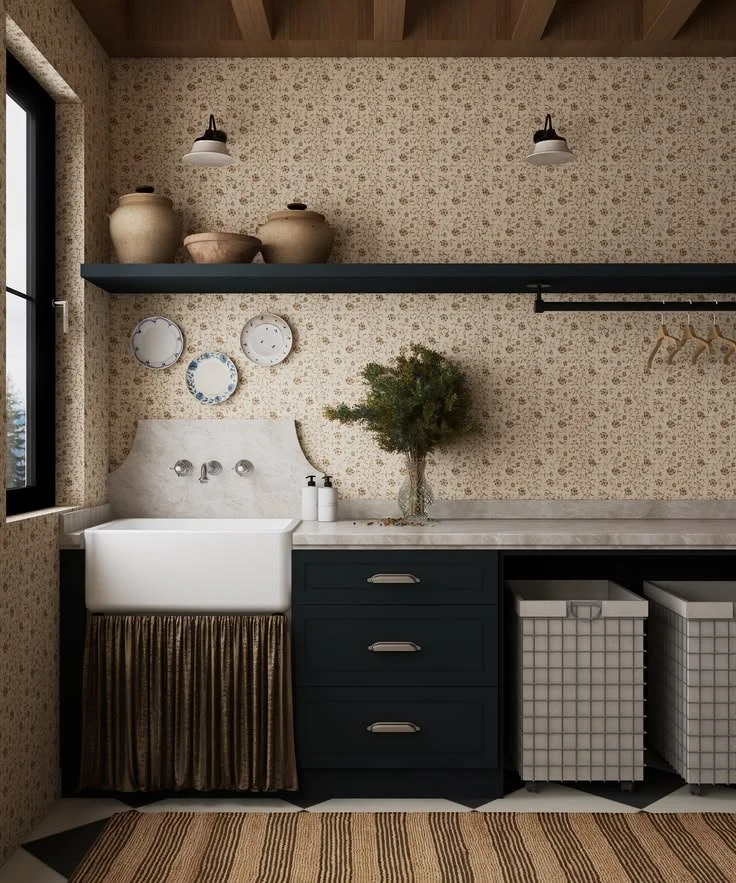
This is where people tell me that we can skip the fabric selections, and I always push back. A simple roman shade in an indoor-outdoor fabric, a small upholstered bench cushion in a performance weave, a textile basket or two. These things make a hardworking space feel considered rather than purely functional, and that matters because the mudroom is often the first room you walk into. How it feels sets the tone for the rest of the house, even if you never consciously register it.
Practical and beautiful are not in opposition. The mudroom is one of the best places in a home to prove that.
A Note on Mixing
The question I get most often about fabric is whether it's okay to mix patterns. The answer is almost always yes, with two things worth keeping in mind: vary the scale and consider the color palette. A large floral and a small geometric can coexist beautifully. Two patterns of the same scale competing in the same space is where things tend to unravel.
And when you're not sure, let texture be your pattern. A room of solids in varying textures, like linen, velvet, wool, or cotton, can be just as visually rich as one with multiple prints, and it asks a lot less of you in the putting-together.
Fabric is also one of the more forgiving choices in a home. Pillows can be recovered. Chairs can be reupholstered. Curtains can come down. Which means there's actually more room to be brave here than people tend to give themselves credit for.
Start with what you're drawn to. Then think about where it lives, how it gets used, and what it needs to do. Nine times out of ten, that's enough to get you to the right answer.
If you're working through a room and want a second set of eyes, the inquiry form is always open.
